Wyckoff Method: Accumulation, Distribution, Spring, Upthrust และ Volume Spread Analysis
Wyckoff Method เป็นวิธีวิเคราะห์ตลาดที่เน้น supply/demand และ price-volume relationships Accumulation เป็นช่วงที่ smart money สะสมหุ้นก่อนราคาขึ้น, Distribution เป็นช่วงที่ smart money ทยอยขายก่อนราคาลง, Spring เป็น false breakdown ที่ล่อ sellers ก่อน markup, Upthrust เป็น false breakout ที่ล่อ buyers ก่อน markdown และ Volume Spread Analysis วิเคราะห์ความสัมพันธ์ระหว่าง volume กับ price spread เพื่อเข้าใจ intention ของ smart money
Richard Wyckoff พัฒนาวิธีนี้ในช่วง 1930s โดยศึกษา พฤติกรรมของ “Composite Man” (smart money/institutions) ที่ manipulate ตลาดเพื่อสะสมหรือกระจายหุ้น Wyckoff Method ไม่ใช่แค่ chart pattern แต่เป็นการอ่าน “เรื่องราว” ของ supply/demand ผ่าน price action + volume
Wyckoff Market Cycle
| Phase | Character | Smart Money Action |
|---|---|---|
| Accumulation | Sideways range หลัง downtrend (boring, low volume) | ทยอยซื้อ (absorb supply โดยไม่ดันราคาขึ้น) |
| Markup | Uptrend (higher highs, higher lows, expanding volume) | หยุดซื้อ — ให้ demand จาก retail ดันราคาต่อ |
| Distribution | Sideways range หลัง uptrend (volatile, high volume) | ทยอยขาย (distribute ให้ retail โดยไม่กดราคาลง) |
| Markdown | Downtrend (lower highs, lower lows) | หยุดขาย — ให้ panic selling กดราคาต่อ |
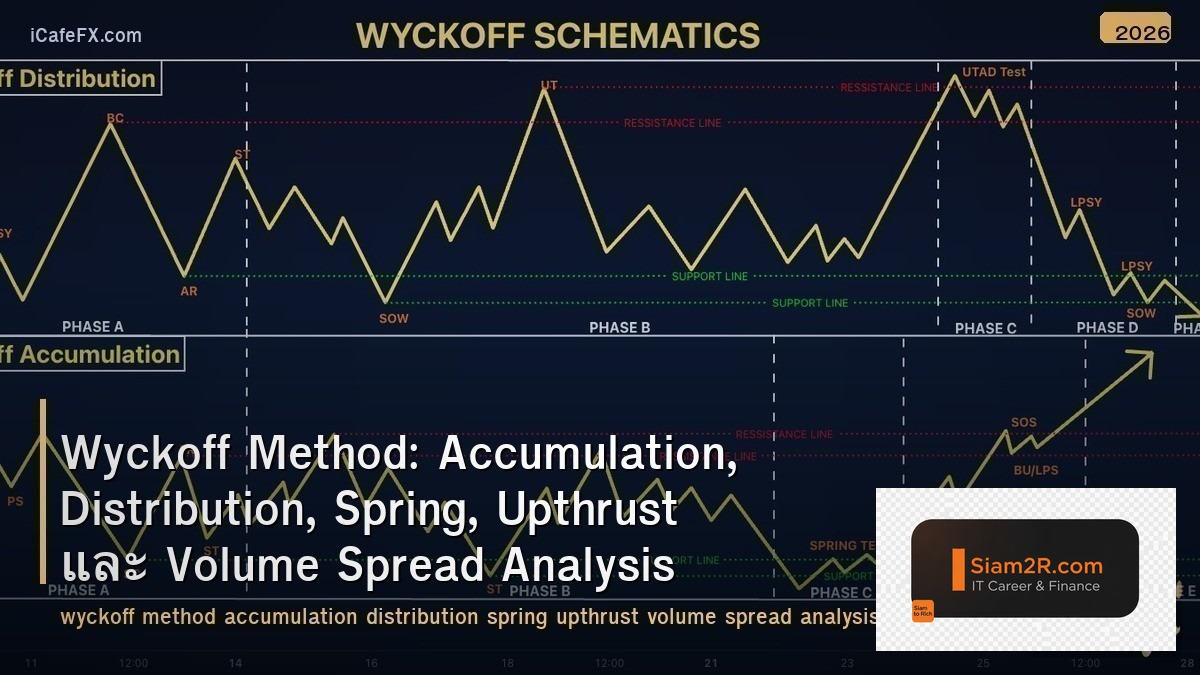
Accumulation Schematic
| Phase | Event | รายละเอียด |
|---|---|---|
| Phase A | PS (Preliminary Support) | Buying เริ่มปรากฏ — downtrend ชะลอ (volume สูงขึ้น) |
| Phase A | SC (Selling Climax) | Panic selling สุดขีด — volume สูงสุด, spread กว้าง, ราคาร่วง sharp |
| Phase A | AR (Automatic Rally) | Bounce จาก SC — short covering + bargain hunting (กำหนด upper range) |
| Phase A | ST (Secondary Test) | ราคาลงมา test SC area — volume ลดลง (selling pressure หมด) |
| Phase B | Building Cause | Sideways range (ST to AR) — smart money สะสมอย่างเงียบๆ |
| Phase C | Spring / Shakeout | ราคาหลุด support ชั่วคราว → ล่อ sellers → กลับตัวขึ้น (trap!) |
| Phase D | SOS (Sign of Strength) | ราคาขึ้นด้วย volume สูง — demand เริ่มชนะ supply |
| Phase D | LPS (Last Point of Support) | Pullback หลัง SOS — volume ต่ำ (จุด entry ที่ดี) |
| Phase E | Markup Begins | ราคาออกจาก range ขึ้นไป — uptrend เริ่มต้น |
Distribution Schematic
| Phase | Event | รายละเอียด |
|---|---|---|
| Phase A | PSY (Preliminary Supply) | Selling เริ่มปรากฏ — uptrend ชะลอ |
| Phase A | BC (Buying Climax) | Euphoric buying สุดขีด — volume สูงสุด, spread กว้าง |
| Phase A | AR (Automatic Reaction) | Pullback จาก BC — profit taking (กำหนด lower range) |
| Phase A | ST (Secondary Test) | ราคาขึ้นมา test BC area — volume ลดลง (buying pressure หมด) |
| Phase B | Building Cause | Sideways range — smart money ทยอยขาย (distribute) |
| Phase C | UTAD (Upthrust After Distribution) | ราคาทะลุ resistance ชั่วคราว → ล่อ buyers → กลับลง (trap!) |
| Phase D | SOW (Sign of Weakness) | ราคาลงด้วย volume สูง — supply เริ่มชนะ demand |
| Phase D | LPSY (Last Point of Supply) | Rally หลัง SOW — volume ต่ำ (จุด short entry ที่ดี) |
| Phase E | Markdown Begins | ราคาออกจาก range ลงไป — downtrend เริ่มต้น |
Spring and Upthrust
| Event | Context | Signal |
|---|---|---|
| Spring | Accumulation — ราคาหลุด support แล้วกลับขึ้นเร็ว | Bullish trap (shake out weak holders → smart money buys) |
| Spring Test | ราคาลงมา test Spring level — volume ต่ำ | Confirm spring valid (no more selling) |
| Upthrust (UT) | Distribution — ราคาทะลุ resistance แล้วกลับลงเร็ว | Bearish trap (suck in late buyers → smart money sells) |
| UTAD | Upthrust After Distribution — stronger version | Final trap before markdown (most deceptive) |
Volume Spread Analysis (VSA)
| Pattern | Volume | Spread | Close | Meaning |
|---|---|---|---|---|
| No Supply | Low | Narrow | Middle-High | Sellers หมด → bullish (buy signal in uptrend) |
| No Demand | Low | Narrow | Middle-Low | Buyers หมด → bearish (sell signal in downtrend) |
| Stopping Volume | Very High | Wide | Close off lows | Demand absorbing supply → potential bottom |
| Climactic Action | Ultra High | Wide | Close on extremes | Exhaustion → potential reversal (SC or BC) |
| Effort vs Result | High | Narrow | Any | High effort (volume) but little result (spread) → resistance/reversal |
| Test | Low | Can vary | Close above middle | Testing previous supply → if low volume = supply absorbed |
Wyckoff Trading Strategy
| Step | Action |
|---|---|
| 1. Identify Phase | ดูว่าตลาดอยู่ใน Accumulation หรือ Distribution (sideways range) |
| 2. Watch for Spring/UT | รอ Spring (accumulation) หรือ Upthrust (distribution) เป็น trap event |
| 3. Confirm with Volume | Spring test ด้วย low volume = valid | High volume = not spring (more supply) |
| 4. Entry at LPS/LPSY | Buy at LPS (Last Point of Support) | Short at LPSY (Last Point of Supply) |
| 5. SOS/SOW Confirmation | SOS ขึ้นด้วย high volume = markup starting | SOW ลงด้วย high volume = markdown |
| 6. Stop Loss | Below Spring (longs) | Above UTAD (shorts) |
| 7. Target | Point and Figure count จาก range width × number of columns |
ทิ้งท้าย: Wyckoff = Read the Story of Supply and Demand
Wyckoff Method Cycle: Accumulation → Markup → Distribution → Markdown (repeating) Accumulation: SC (selling climax) → AR → ST → Spring → SOS → LPS → Markup Distribution: BC (buying climax) → AR → ST → UTAD → SOW → LPSY → Markdown Spring: false breakdown in accumulation (bullish trap → buy opportunity) Upthrust: false breakout in distribution (bearish trap → sell opportunity) VSA: analyze volume + spread + close to understand smart money intention Key: price tells you what, volume tells you why → combine both for edge
อ่านเพิ่มเติมเกี่ยวกับ Volume Profile Trading POC Value Area และ Elliott Wave Theory Fibonacci ที่ siam2r.com หรือจาก icafeforex.com และ siamlancard.com
FAQ
Wyckoff Method: Accumulation, Distribution, Spring, Upthrust และ Volume Spread Analysis คืออะไร?
Wyckoff Method: Accumulation, Distribution, Spring, Upthrust และ Volume Spread Analysis เป็นหัวข้อสำคัญในวงการเทคโนโลยีที่ช่วยให้การทำงานมีประสิทธิภาพมากขึ้น ไม่ว่าจะเป็นด้าน IT, Network หรือ Server Management
ทำไมต้องเรียนรู้เรื่อง Wyckoff Method: Accumulation, Distribution, Spring, Upthrust และ Volume Spread Analysis?
เพราะ Wyckoff Method: Accumulation, Distribution, Spring, Upthrust และ Volume Spread Analysis เป็นทักษะที่ตลาดต้องการสูง และช่วยให้คุณแก้ปัญหาในงานจริงได้อย่างมืออาชีพ การเรียนรู้ตั้งแต่วันนี้จะเป็นประโยชน์ในระยะยาว
Wyckoff Method: Accumulation, Distribution, Spring, Upthrust และ Volume Spread Analysis เหมาะกับผู้เริ่มต้นไหม?
ได้แน่นอนครับ บทความนี้เขียนให้เข้าใจง่าย เหมาะทั้งผู้เริ่มต้นและผู้มีประสบการณ์ มี step-by-step guide พร้อมตัวอย่างให้ทำตามได้ทันที
Wyckoff Method: Accumulation, Distribution, Spring, Upthrust และ Volume Spread Analysis ทำไมถึงสำคัญสำหรับเทรดเดอร์?
Wyckoff Method: Accumulation, Distribution, Spring, Upthrust และ Volume Spread Analysis เป็นหัวข้อที่เทรดเดอร์ทุกระดับควรศึกษาอย่างจริงจัง ไม่ว่าคุณจะเทรด Forex, ทองคำ XAU/USD หรือ Crypto การเข้าใจ Wyckoff Method: Accumulation, Distribution, Spring, Upthrust และ Volume Spread Analysis จะช่วยให้ตัดสินใจเทรดได้ดีขึ้น ลดความเสี่ยง และเพิ่มโอกาสทำกำไรอย่างยั่งยืน จากประสบการณ์ที่ผ่านมา เทรดเดอร์ที่เข้าใจหัวข้อนี้ดีมักจะมี consistency สูงกว่าคนที่เทรดตามสัญชาตญาณ
วิธีนำ Wyckoff Method: Accumulation, Distribution, Spring, Upthrust และ Volume Spread Analysis ไปใช้จริง
การเรียนรู้ทฤษฎีอย่างเดียวไม่พอ ต้องฝึกปฏิบัติจริงด้วย แนะนำให้ทำตามขั้นตอน:
- ศึกษาทฤษฎีให้เข้าใจ — อ่านบทความนี้ให้ครบ ทำความเข้าใจหลักการพื้นฐาน
- ฝึกบน Demo Account — เปิดบัญชี demo แล้วลองใช้ Wyckoff Method: Accumulation, Distribution, Spring, Upthrust และ Volume Spread Analysis กับกราฟจริง ไม่เสี่ยงเงินจริง
- จด Trading Journal — บันทึกทุก trade ที่ใช้เทคนิคนี้ วิเคราะห์ว่าได้ผลเมื่อไหร่ ไม่ได้ผลเมื่อไหร่
- ปรับแต่งให้เข้ากับสไตล์ — ทุกเทคนิคต้องปรับให้เข้ากับ timeframe และ risk tolerance ของคุณ
- เริ่ม live ด้วยเงินน้อย — เมื่อมั่นใจแล้ว เริ่มเทรดจริงด้วย lot size เล็กๆ (0.01-0.05)
เปรียบเทียบ Wyckoff Method: Accumulation, Distribution, Spring, Upthrust และ Volume Spread Analysis กับเทคนิคอื่น
| เทคนิค | ความยาก | ความแม่นยำ | เหมาะกับ |
|---|---|---|---|
| Wyckoff Method: Accumulation, Distribution, Spring, Upthrust และ Volume Spread Analysis | ปานกลาง | สูง (60-70%) | เทรดเดอร์ทุกระดับ |
| Price Action | สูง | สูง (65-75%) | เทรดเดอร์มีประสบการณ์ |
| Smart Money Concepts | สูงมาก | สูงมาก (70%+) | Advanced trader |
| Indicator ง่ายๆ | ต่ำ | ปานกลาง (50-55%) | มือใหม่ |
ข้อผิดพลาดที่พบบ่อยเมื่อใช้ Wyckoff Method: Accumulation, Distribution, Spring, Upthrust และ Volume Spread Analysis
- ไม่รอ confirmation — เห็น signal แล้วเข้าทันทีโดยไม่รอ price action ยืนยัน ทำให้โดน false signal บ่อย
- ใช้ timeframe เล็กเกินไป — M1, M5 noise เยอะ signal ไม่น่าเชื่อถือ แนะนำ H1 ขึ้นไป
- ไม่ดู big picture — ต้องดู higher timeframe (D1/H4) ก่อน แล้วค่อยลง lower TF หา entry
- Over-trading — เห็น signal ทุก candle ไม่ได้แปลว่าต้องเทรดทุกตัว เลือกเฉพาะที่ confluent
- ไม่ใส่ SL — ไม่ว่าจะมั่นใจแค่ไหน ต้องมี Stop Loss เสมอ
FAQ — Wyckoff Method: Accumulation, Distribution, Spring, Upthrust และ Volume Spread Analysis
Wyckoff Method: Accumulation, Distribution, Spring, Upthrust และ Volume Spread Analysis คืออะไร?
Wyckoff Method: Accumulation, Distribution, Spring, Upthrust และ Volume Spread Analysis เป็นเทคนิค/แนวคิดสำหรับการเทรดที่ช่วยให้วิเคราะห์ตลาดได้แม่นยำขึ้น สามารถนำไปใช้กับ Forex, ทองคำ XAU/USD, Crypto และ CFD ต่างๆ ได้
Wyckoff Method: Accumulation, Distribution, Spring, Upthrust และ Volume Spread Analysis เหมาะกับมือใหม่ไหม?
เหมาะครับ แนะนำให้เริ่มฝึกบน Demo Account ก่อน แล้วค่อยเริ่มเทรดจริงเมื่อมั่นใจ บทความนี้อธิบายตั้งแต่พื้นฐาน
Timeframe ไหนเหมาะกับ Wyckoff Method: Accumulation, Distribution, Spring, Upthrust และ Volume Spread Analysis?
H1 และ H4 ดีที่สุดสำหรับ Wyckoff Method: Accumulation, Distribution, Spring, Upthrust และ Volume Spread Analysis ใน trading ทั่วไป D1 สำหรับ swing trading M15 สำหรับ scalping
อ่านเพิ่มเติม: iCafeForex.com | SiamLanCard.com