Sector Rotation Strategy: Business Cycle, Relative Strength และ ETF Rotation
Sector Rotation เป็นกลยุทธ์การลงทุนที่สลับน้ำหนักระหว่าง sectors ตาม business cycle และ relative strength Business Cycle บอกว่า sector ไหนมักทำผลงานดีในแต่ละ phase ของเศรษฐกิจ, Relative Strength เปรียบเทียบ performance ของ sector กับตลาดรวม และ ETF Rotation ใช้ sector ETFs เพื่อ implement strategy ได้สะดวกและ cost-effective
นักลงทุนส่วนใหญ่ซื้อ index fund แล้วถือตลอด (buy and hold) ซึ่งดี แต่ sector rotation ให้ alpha เพิ่มได้ 2-5% ต่อปี เพราะ sectors มี performance ต่างกันมากในแต่ละช่วงเวลา sector ที่ดีที่สุดกับแย่ที่สุดในปีเดียวกันอาจต่างกัน 30-50% การเลือก overweight sector ที่ดีและ underweight sector ที่แย่สร้าง edge ที่มีนัยสำคัญ
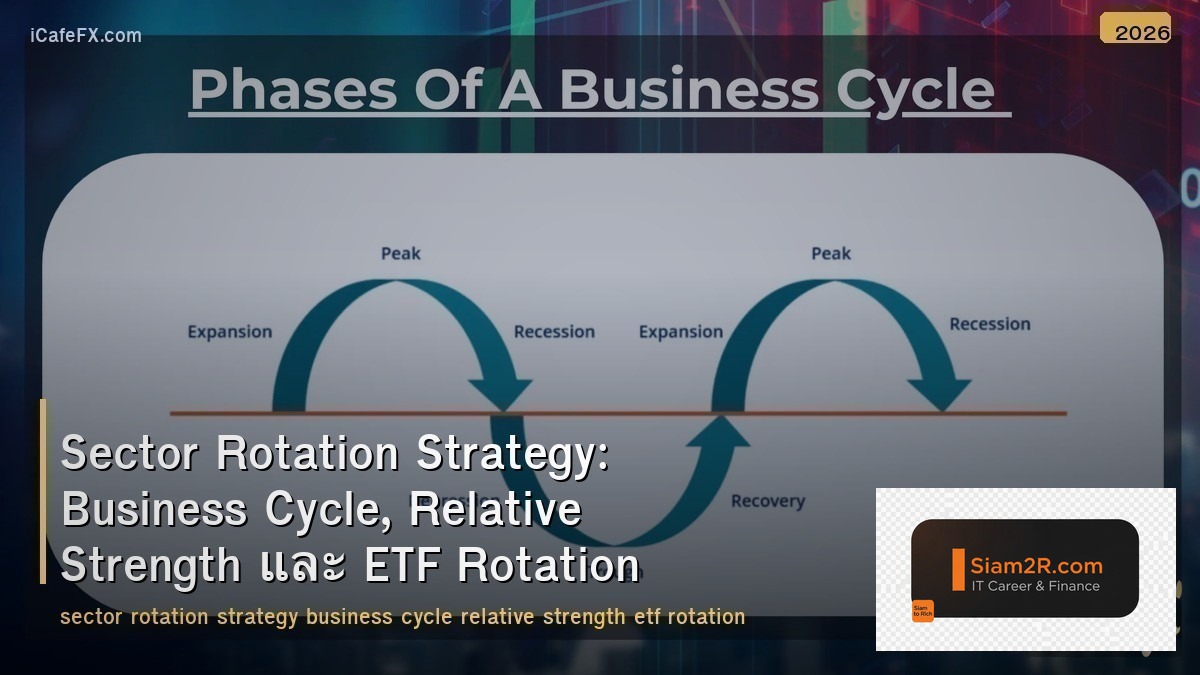
Business Cycle Phases
| Phase | เศรษฐกิจ | ดอกเบี้ย | Leading Sectors |
|---|---|---|---|
| Early Recovery | GDP เริ่มฟื้น, unemployment สูงแต่ลดลง | ต่ำ (Fed กระตุ้น) | Financials, Consumer Discretionary, Industrials, Real Estate |
| Mid Expansion | GDP โตแข็งแกร่ง, employment ดี | ค่อยๆ ขึ้น | Technology, Communication Services, Industrials |
| Late Expansion | GDP ชะลอ, inflation สูงขึ้น | สูง (Fed ขึ้นดอกเบี้ย) | Energy, Materials, Consumer Staples |
| Recession | GDP หดตัว, unemployment สูงขึ้น | ลดลง (Fed ลดดอกเบี้ย) | Utilities, Healthcare, Consumer Staples (Defensive) |
S&P 500 Sectors (GICS)
| Sector | Weight (~) | Cyclical/Defensive | Interest Rate Sensitivity |
|---|---|---|---|
| Information Technology | ~30% | Cyclical (growth) | High (growth stocks hurt by high rates) |
| Healthcare | ~13% | Defensive | Low (non-cyclical demand) |
| Financials | ~13% | Cyclical | Positive (banks benefit from higher rates) |
| Consumer Discretionary | ~10% | Cyclical | High (consumer spending sensitive to economy) |
| Communication Services | ~9% | Mixed | Medium |
| Industrials | ~8% | Cyclical | Medium (capex driven) |
| Consumer Staples | ~6% | Defensive | Low (essential goods, stable demand) |
| Energy | ~4% | Cyclical | Low (commodity driven) |
| Utilities | ~3% | Defensive | High (bond proxy, hurt by rising rates) |
| Real Estate | ~2% | Mixed | High (rate sensitive, REIT yields) |
| Materials | ~2% | Cyclical | Medium (commodity + industrial demand) |
Relative Strength Analysis
| Method | How | Signal |
|---|---|---|
| RS Ratio (sector/market) | Sector price ÷ S&P 500 price → plot ratio | Ratio ขึ้น = sector outperforms | Ratio ลง = underperforms |
| RS Line on Chart | Overlay RS line บน sector chart | New high in RS line = sector strength confirmed |
| RRG (Relative Rotation Graph) | Plot RS ratio + RS momentum → 4 quadrants | Leading → Weakening → Lagging → Improving (clockwise rotation) |
| Mansfield RS | RS ratio normalized (zero line = market performance) | Above zero = outperforming | Below zero = underperforming |
| Performance Ranking | Rank sectors by 1/3/6/12 month return | Top 3 sectors = overweight candidates |
RRG Quadrants
| Quadrant | RS Ratio | RS Momentum | Meaning |
|---|---|---|---|
| Leading (บนขวา) | สูง | สูง | Strong outperformance → overweight (best phase) |
| Weakening (ล่างขวา) | สูง | ลดลง | Still outperforming but losing momentum → prepare to reduce |
| Lagging (ล่างซ้าย) | ต่ำ | ต่ำ | Underperforming → underweight/avoid |
| Improving (บนซ้าย) | ต่ำ | เพิ่มขึ้น | Starting to improve → watch for rotation into Leading |
ETF Rotation Implementation
| Sector | US ETF | Thai SET Equivalent |
|---|---|---|
| Technology | XLK, VGT, QQQ | หุ้นกลุ่มเทคโนโลยี (DELTA, HANA) |
| Healthcare | XLV, VHT | หุ้นกลุ่มการแพทย์ (BDMS, BH) |
| Financials | XLF, VFH | หุ้นกลุ่มธนาคาร (KBANK, BBL, SCB) |
| Consumer Discretionary | XLY, VCR | หุ้นกลุ่มพาณิชย์ (CPALL, CRC) |
| Energy | XLE, VDE | หุ้นกลุ่มพลังงาน (PTT, PTTEP, GULF) |
| Utilities | XLU, VPU | หุ้นกลุ่มไฟฟ้า (EGCO, RATCH, BGRIM) |
| Industrials | XLI, VIS | หุ้นกลุ่มอุตสาหกรรม (SCC, SCGP) |
| Real Estate | XLRE, VNQ | กอง REITs (CPNREIT, FTREIT) |
Rotation Strategy Models
| Model | Method | Rebalance |
|---|---|---|
| Momentum (simple) | Buy top 3 sectors by 6-month return → hold | Monthly |
| Dual Momentum | Absolute momentum (> 0) + Relative momentum (top sectors) | Monthly |
| Business Cycle | Identify current phase → overweight corresponding sectors | Quarterly |
| RS Ranking | Rank by Mansfield RS → top 3-4 sectors = overweight | Monthly |
| RRG-Based | Overweight Leading quadrant → underweight Lagging | Bi-weekly to monthly |
| Seasonal + Momentum | Combine seasonal patterns + momentum ranking | Monthly |
สำหรับตลาดหุ้นไทย
| กลุ่ม SET | ช่วงที่มักทำผลงานดี |
|---|---|
| ธนาคาร | ดอกเบี้ยขาขึ้น, เศรษฐกิจเริ่มฟื้น |
| พลังงาน | น้ำมันขาขึ้น, เศรษฐกิจโลกฟื้น, late cycle |
| อสังหาริมทรัพย์ | ดอกเบี้ยขาลง, early recovery |
| พาณิชย์ | เศรษฐกิจขยายตัว, consumer confidence สูง |
| การแพทย์ | Defensive (ทำได้ดีในทุกช่วง โดยเฉพาะ recession) |
| ท่องเที่ยว | Early-mid expansion, post-crisis recovery |
ทิ้งท้าย: Sector Rotation = Right Sector at Right Time
Sector Rotation Business Cycle: Early (Financials, Discretionary) → Mid (Tech, Industrials) → Late (Energy, Materials) → Recession (Utilities, Healthcare, Staples) Relative Strength: RS ratio, Mansfield RS, RRG quadrants (Leading → Weakening → Lagging → Improving) ETF Rotation: use sector ETFs (XLK, XLF, XLE, etc.) for easy implementation Models: momentum ranking, dual momentum, RS ranking, RRG-based, business cycle Thai Market: ธนาคาร (ดอกเบี้ยขึ้น), พลังงาน (late cycle), อสังหา (ดอกเบี้ยลง), การแพทย์ (defensive) Alpha: 2-5% per year potential over buy-and-hold through sector timing
อ่านเพิ่มเติมเกี่ยวกับ Seasonal Patterns Sell in May และ Intermarket Analysis Bonds Currencies ที่ siam2r.com หรือจาก icafeforex.com และ siamlancard.com
อ่านเพิ่มเติม: เทรดทองคำ XAU/USD | XM Signal EA
อ่านเพิ่มเติม: เทรดทองคำ XAU/USD | ดาวน์โหลด EA ฟรี
อ่านเพิ่มเติม: วิเคราะห์ทองคำ | Smart Money Concept
FAQ
Sector Rotation Strategy: Business Cycle, Relative Strength และ ETF Rotation คืออะไร?
Sector Rotation Strategy: Business Cycle, Relative Strength และ ETF Rotation เป็นหัวข้อสำคัญในวงการเทคโนโลยีที่ช่วยให้การทำงานมีประสิทธิภาพมากขึ้น ไม่ว่าจะเป็นด้าน IT, Network หรือ Server Management
ทำไมต้องเรียนรู้เรื่อง Sector Rotation Strategy: Business Cycle, Relative Strength และ ETF Rotation?
เพราะ Sector Rotation Strategy: Business Cycle, Relative Strength และ ETF Rotation เป็นทักษะที่ตลาดต้องการสูง และช่วยให้คุณแก้ปัญหาในงานจริงได้อย่างมืออาชีพ การเรียนรู้ตั้งแต่วันนี้จะเป็นประโยชน์ในระยะยาว
Sector Rotation Strategy: Business Cycle, Relative Strength และ ETF Rotation เหมาะกับผู้เริ่มต้นไหม?
ได้แน่นอนครับ บทความนี้เขียนให้เข้าใจง่าย เหมาะทั้งผู้เริ่มต้นและผู้มีประสบการณ์ มี step-by-step guide พร้อมตัวอย่างให้ทำตามได้ทันที
สิ่งที่คุณจะได้เรียนรู้จากบทความนี้
บทความ Sector Rotation Strategy: Business Cycle, Relative Strength และ ETF Rotation นี้ครอบคลุมทุกอย่างที่คุณต้องรู้ ตั้งแต่พื้นฐานไปจนถึงการนำไปใช้จริง เขียนจากประสบการณ์จริง ไม่ใช่แค่ทฤษฎี มีตัวอย่างและ step-by-step guide ให้ทำตามได้ทันที
ทำไม Sector Rotation Strategy: Business Cycle, Relative Strength และ ETF Rotation ถึงน่าสนใจ?
Sector Rotation Strategy: Business Cycle, Relative Strength และ ETF Rotation เป็นหัวข้อที่กำลังได้รับความสนใจสูงมากในปี 2569 ทั้งจากมือใหม่และผู้เชี่ยวชาญ เพราะมีการเปลี่ยนแปลงและพัฒนาใหม่ๆ อยู่ตลอด การติดตามข้อมูลล่าสุดเป็นสิ่งสำคัญ
FAQ
Sector Rotation Strategy: Business Cycle, Relative Strength และ ETF Rotation คืออะไร?
อ่านรายละเอียดทั้งหมดในบทความนี้ ครอบคลุมตั้งแต่พื้นฐานไปจนถึงขั้นสูง
iCafeForex | SiamLanCard | Siam2R | XM Signal
สิ่งที่ควรรู้เพิ่มเติมเกี่ยวกับ Sector Rotation Strategy: Business Cycle, Relative Strength และ ETF Rotation
Sector Rotation Strategy: Business Cycle, Relative Strength และ ETF Rotation ยังมีมิติอื่นที่น่าสนใจ การศึกษาเพิ่มเติมจะช่วยให้เข้าใจภาพรวมได้ดีขึ้น แนะนำให้อ่านบทความที่เกี่ยวข้องเพิ่มเติมและฝึกปฏิบัติจริง
อ่านเพิ่มเติม: iCafeForex | XM Signal EA ฟรี | SiamLanCard | Siam2R
สิ่งที่ควรรู้เพิ่มเติมเกี่ยวกับ Sector Rotation Strategy: Business Cycle, Relative Strength และ ETF Rotation
Sector Rotation Strategy: Business Cycle, Relative Strength และ ETF Rotation ยังมีมิติอื่นที่น่าสนใจ การศึกษาเพิ่มเติมจะช่วยให้เข้าใจภาพรวมได้ดีขึ้น แนะนำให้อ่านบทความที่เกี่ยวข้องเพิ่มเติมและฝึกปฏิบัติจริง
อ่านเพิ่มเติม: iCafeForex | XM Signal EA ฟรี | SiamLanCard | Siam2R
สิ่งที่ควรรู้เพิ่มเติมเกี่ยวกับ Sector Rotation Strategy: Business Cycle, Relative Strength และ ETF Rotation
Sector Rotation Strategy: Business Cycle, Relative Strength และ ETF Rotation ยังมีมิติอื่นที่น่าสนใจ การศึกษาเพิ่มเติมจะช่วยให้เข้าใจภาพรวมได้ดีขึ้น แนะนำให้อ่านบทความที่เกี่ยวข้องเพิ่มเติมและฝึกปฏิบัติจริง
อ่านเพิ่มเติม: iCafeForex | XM Signal EA ฟรี | SiamLanCard | Siam2R
สิ่งที่ควรรู้เพิ่มเติมเกี่ยวกับ Sector Rotation Strategy: Business Cycle, Relative Strength และ ETF Rotation
Sector Rotation Strategy: Business Cycle, Relative Strength และ ETF Rotation ยังมีมิติอื่นที่น่าสนใจ การศึกษาเพิ่มเติมจะช่วยให้เข้าใจภาพรวมได้ดีขึ้น แนะนำให้อ่านบทความที่เกี่ยวข้องเพิ่มเติมและฝึกปฏิบัติจริง
อ่านเพิ่มเติม: iCafeForex | XM Signal EA ฟรี | SiamLanCard | Siam2R