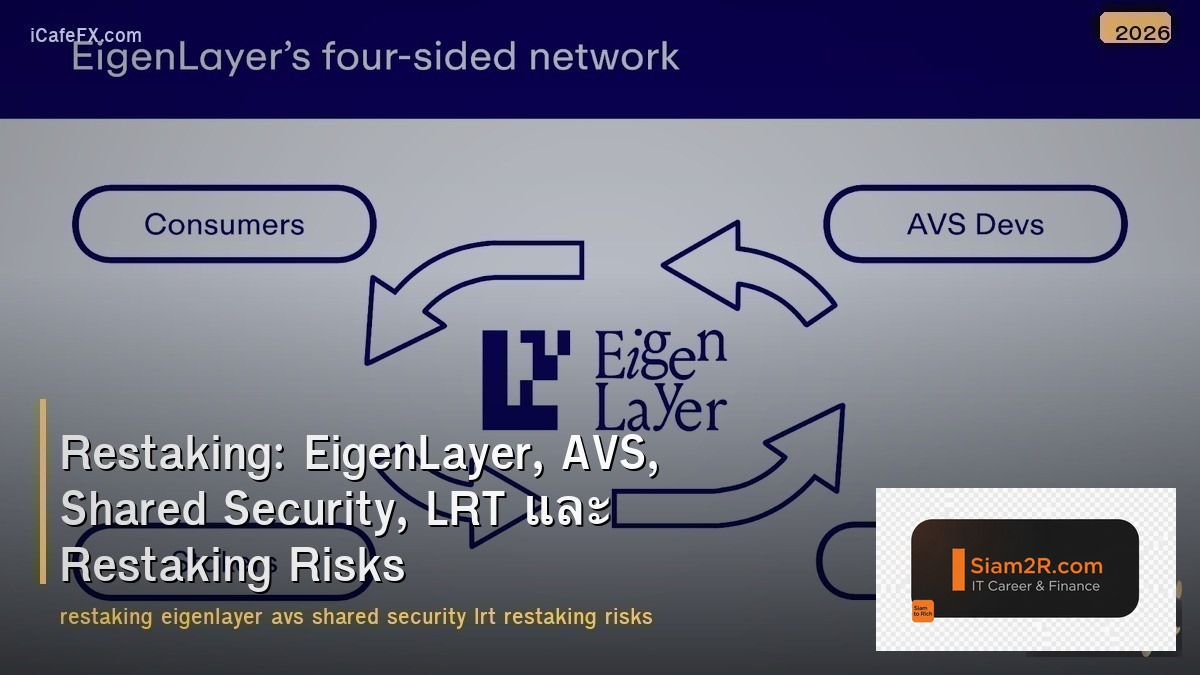
Restaking: EigenLayer, AVS, Shared Security, LRT และ Restaking Risks
Restaking ขยายความปลอดภัยของ Ethereum ไปยัง protocols อื่น EigenLayer เป็น restaking protocol ที่ใหญ่ที่สุดบน Ethereum, AVS (Actively Validated Services) ใช้ restaked ETH เพื่อ secure services ใหม่, Shared Security ให้ protocols ใหม่ยืม security จาก Ethereum, LRT (Liquid Restaking Tokens) ให้ liquidity สำหรับ restaked assets และ Restaking Risks มีทั้ง slashing risk และ systemic risk ที่ต้องเข้าใจ
Protocols ใหม่ต้อง bootstrap security ตั้งแต่ศูนย์: ต้องหา validators, สร้าง economic security → ยาก, แพง, ใช้เวลานาน Restaking แก้ปัญหา: protocols ใหม่ “เช่า” security จาก Ethereum’s $100B+ staked ETH → ได้ security ทันทีโดยไม่ต้องสร้างเอง EigenLayer มี TVL $15B+ เป็นหนึ่งใน largest DeFi protocols
Restaking Concept
| Concept | รายละเอียด |
|---|---|
| Staking | Lock ETH เพื่อ secure Ethereum → earn staking rewards (~3.5%) |
| Restaking | ใช้ staked ETH (หรือ LST) เพื่อ secure additional services → earn extra rewards |
| Double Duty | Same capital secures both Ethereum + additional protocols → capital efficiency |
| Opt-In | Validators/stakers choose ว่าจะ restake ให้ AVS ไหน (voluntary) |
| Slashing | ถ้า validator ทำผิดกฎของ AVS → ถูก slash (สูญเสียส่วนของ staked ETH) |
EigenLayer
| Feature | รายละเอียด |
|---|---|
| คืออะไร | Restaking protocol บน Ethereum — marketplace ที่เชื่อม restakers กับ AVS |
| TVL | $15B+ (one of largest DeFi protocols) |
| Native Restaking | Point Ethereum validator’s withdrawal credentials ไป EigenPod → restake native ETH |
| LST Restaking | Deposit LSTs (stETH, rETH, cbETH) ใน EigenLayer → restake |
| Operators | Node operators ที่ run AVS software + validate on behalf of restakers |
| Delegation | Restakers delegate ให้ operators (ไม่ต้อง run software เอง) |
| EIGEN Token | Governance + universal intersubjective work token (unique cryptoeconomic design) |
AVS (Actively Validated Services)
| AVS | What | Use Case |
|---|---|---|
| EigenDA | Data availability layer | Rollups ใช้ EigenDA แทน Ethereum calldata (cheaper DA) |
| Omni Network | Cross-rollup interoperability | Connect Ethereum rollups (Arbitrum, Optimism, Base) seamlessly |
| Lagrange | ZK coprocessor | Verifiable computation สำหรับ cross-chain applications |
| Witness Chain | DePIN coordination | Coordinate decentralized physical infrastructure networks |
| Brevis | ZK coprocessor | Access historical blockchain data with ZK proofs |
| Hyperlane | Interchain messaging | Cross-chain message passing secured by restaked ETH |
Shared Security Model
| Model | How | Example |
|---|---|---|
| Native Security | Protocol มี validators/stakers ของตัวเอง | Cosmos chains, Avalanche subnets (ต้อง bootstrap เอง) |
| Shared Security (Restaking) | ยืม security จาก base chain (Ethereum) | EigenLayer AVS — ได้ security ทันที |
| Interchain Security | Cosmos Hub validators ก็ validate consumer chains | Cosmos ICS (Stride, Neutron) |
| Mesh Security | Multiple chains provide security to each other | Cosmos Mesh Security (bidirectional) |
LRT (Liquid Restaking Tokens)
| LRT | Protocol | Feature |
|---|---|---|
| eETH | ether.fi | Largest LRT ($5B+ TVL), native restaking, automatic AVS selection |
| pufETH | Puffer Finance | Anti-slashing technology, lower operator requirements (1 ETH) |
| rsETH | KelpDAO | Multi-LST restaking (accept stETH, ETHx, sfrxETH) |
| ezETH | Renzo | Cross-chain restaking (Ethereum + L2s) |
| swETH | Swell | Liquid staking + restaking in one protocol |
LRT DeFi Strategies
| Strategy | How | Yield |
|---|---|---|
| Hold LRT | ถือ eETH/pufETH → earn staking + restaking rewards | 4-8% (staking + AVS rewards) |
| LRT as Collateral | Deposit LRT ใน lending (Aave, Morpho) → borrow | Restaking yield + borrow spread |
| LRT LP | Provide liquidity LRT/ETH on DEX | Restaking + swap fees |
| Pendle YT/PT | Trade fixed/variable restaking yield on Pendle | Fixed 8-15% or leveraged variable |
| Points Farming | Deposit ใน LRT protocols → earn points → future airdrop | Speculative (airdrop value unknown) |
Restaking Risks
| Risk | รายละเอียด | Mitigation |
|---|---|---|
| AVS Slashing | Operator ทำผิดกฎ AVS → ถูก slash (lose staked ETH) | Choose reliable operators, diversify across AVS |
| Smart Contract | Bug ใน EigenLayer/LRT contracts → loss of funds | Audited protocols, insurance (Nexus Mutual) |
| Operator Risk | Operator ที่ delegated ทำพลาด → restaker ถูก slash | Due diligence on operator track record |
| Systemic Risk | Mass slashing event → cascade liquidations → depeg of LRTs | Limit exposure, don’t over-leverage LRT positions |
| Complexity | หลาย layers (staking → restaking → LRT → DeFi) = more attack surface | Understand each layer’s risks before stacking |
| Regulatory | SEC อาจ classify restaking rewards/tokens as securities | Monitor regulatory developments |
ทิ้งท้าย: Restaking = Extend Ethereum Security to New Services
Restaking Concept: use staked ETH to secure additional services (AVS) → same capital, more utility EigenLayer: $15B+ TVL, native/LST restaking, operators, delegation, EIGEN token AVS: EigenDA (data availability), Omni (cross-rollup), Lagrange/Brevis (ZK coprocessors) Shared Security: restaking (EigenLayer) vs native (bootstrap) vs ICS (Cosmos) vs mesh LRT: eETH (ether.fi, largest), pufETH (Puffer), rsETH (Kelp), ezETH (Renzo) Strategies: hold LRT (4-8%), collateral, LP, Pendle yield trading, points farming Risks: AVS slashing, smart contract, operator risk, systemic (cascade liquidations), complexity Key: restaking improves capital efficiency but adds layers of risk — understand before stacking yield
อ่านเพิ่มเติมเกี่ยวกับ Liquid Staking Derivatives Lido stETH และ DePIN Decentralized Physical Infrastructure ที่ siam2r.com หรือจาก icafeforex.com และ siamlancard.com
อ่านเพิ่มเติม: เทรด Forex | EA Semi-Auto ฟรี
FAQ
Restaking: EigenLayer, AVS, Shared Security, LRT และ Restaking Risks คืออะไร?
Restaking: EigenLayer, AVS, Shared Security, LRT และ Restaking Risks เป็นหัวข้อสำคัญในวงการเทคโนโลยีที่ช่วยให้การทำงานมีประสิทธิภาพมากขึ้น ไม่ว่าจะเป็นด้าน IT, Network หรือ Server Management
ทำไมต้องเรียนรู้เรื่อง Restaking: EigenLayer, AVS, Shared Security, LRT และ Restaking Risks?
เพราะ Restaking: EigenLayer, AVS, Shared Security, LRT และ Restaking Risks เป็นทักษะที่ตลาดต้องการสูง และช่วยให้คุณแก้ปัญหาในงานจริงได้อย่างมืออาชีพ การเรียนรู้ตั้งแต่วันนี้จะเป็นประโยชน์ในระยะยาว
Restaking: EigenLayer, AVS, Shared Security, LRT และ Restaking Risks เหมาะกับผู้เริ่มต้นไหม?
ได้แน่นอนครับ บทความนี้เขียนให้เข้าใจง่าย เหมาะทั้งผู้เริ่มต้นและผู้มีประสบการณ์ มี step-by-step guide พร้อมตัวอย่างให้ทำตามได้ทันที
Restaking: EigenLayer, AVS, Shared Security, LRT และ Restaking Risks — ทำไมถึงสำคัญ?
Restaking: EigenLayer, AVS, Shared Security, LRT และ Restaking Risks เป็นหัวข้อสำคัญในวงการ IT ที่ System Admin, Network Engineer และ DevOps Engineer ควรเข้าใจเป็นอย่างดี การรู้เรื่องนี้จะช่วยให้ทำงานได้มีประสิทธิภาพมากขึ้น แก้ปัญหาได้เร็วขึ้น และเป็นทักษะที่ตลาดแรงงานต้องการสูง
เริ่มต้นเรียนรู้ Restaking: EigenLayer, AVS, Shared Security, LRT และ Restaking Risks
แนะนำ path การเรียนรู้:
- อ่านเอกสาร official — เริ่มจาก documentation ของเครื่องมือ/เทคโนโลยีนั้นๆ
- ทำ lab จริง — ตั้ง VM หรือ Docker container แล้วลองทำตาม tutorial
- ทำ project จริง — ใช้กับงานจริงหรือ side project เรียนรู้จากปัญหาที่เจอ
- อ่าน best practices — ศึกษาว่าคนอื่นใช้งานจริงยังไง มี pitfall อะไร
- เข้า community — Reddit, Stack Overflow, Thai IT groups เรียนรู้จากคนอื่น
เครื่องมือที่แนะนำสำหรับ Restaking: EigenLayer, AVS, Shared Security, LRT และ Restaking Risks
| เครื่องมือ | ใช้สำหรับ | ราคา |
|---|---|---|
| VS Code | Code editor หลัก | ฟรี |
| Docker | Container + Lab environment | ฟรี |
| Git/GitHub | Version control | ฟรี |
| VirtualBox/Proxmox | Virtualization สำหรับ lab | ฟรี |
FAQ — Restaking: EigenLayer, AVS, Shared Security, LRT และ Restaking Risks
Restaking: EigenLayer, AVS, Shared Security, LRT และ Restaking Risks คืออะไร?
Restaking: EigenLayer, AVS, Shared Security, LRT และ Restaking Risks เป็นเทคโนโลยี/ความรู้ด้าน IT ที่ช่วยให้การทำงานมีประสิทธิภาพมากขึ้น อ่านรายละเอียดทั้งหมดในบทความนี้
Restaking: EigenLayer, AVS, Shared Security, LRT และ Restaking Risks เหมาะกับผู้เริ่มต้นไหม?
เหมาะครับ บทความนี้อธิบายตั้งแต่พื้นฐาน มี step-by-step guide พร้อมตัวอย่างให้ทำตาม
เรียนรู้ Restaking: EigenLayer, AVS, Shared Security, LRT และ Restaking Risks ใช้เวลานานไหม?
พื้นฐานใช้เวลา 1-2 สัปดาห์ ขั้นกลาง 1-3 เดือน ขั้นสูงต้องใช้ประสบการณ์จริง 6 เดือน+
อ่านเพิ่มเติม: SiamLanCard.com | iCafeForex.com | Siam2R.com
Best Practices สำหรับ Restaking: EigenLayer, AVS, Shared Security, LRT และ Restaking Risks
Restaking: EigenLayer, AVS, Shared Security, LRT และ Restaking Risks มี best practices ที่ผู้เชี่ยวชาญแนะนำ:
- Documentation — จด document ทุกอย่างที่ทำ เพื่อให้คนอื่น (หรือตัวเอง 6 เดือนหลัง) เข้าใจ
- Version Control — ใช้ Git สำหรับทุก config/code เก็บ history ย้อนกลับได้
- Automation — automate task ที่ทำซ้ำๆ ด้วย script/Ansible/Terraform
- Monitoring — ตั้ง monitoring + alerting ให้รู้ปัญหาก่อน user
- Backup — กฎ 3-2-1 เสมอ 3 copies, 2 media, 1 offsite
ทรัพยากรเรียนรู้เพิ่มเติม
- Official Documentation — แหล่งเรียนรู้ที่ดีที่สุด อ่าน docs ก่อนเสมอ
- YouTube Tutorials — ดู video walkthrough เข้าใจเร็วกว่าอ่าน
- GitHub Examples — ดู code ของคนอื่น เรียนรู้จาก real projects
- Lab Practice — ตั้ง VM/Docker ฝึกจริง ไม่มีอะไรดีกว่าลงมือทำ
อ่านเพิ่มเติม: iCafeForex | XM Signal EA ฟรี | SiamLanCard | Siam2R