Bollinger Bands: Squeeze, Breakout และ Mean Reversion Strategy
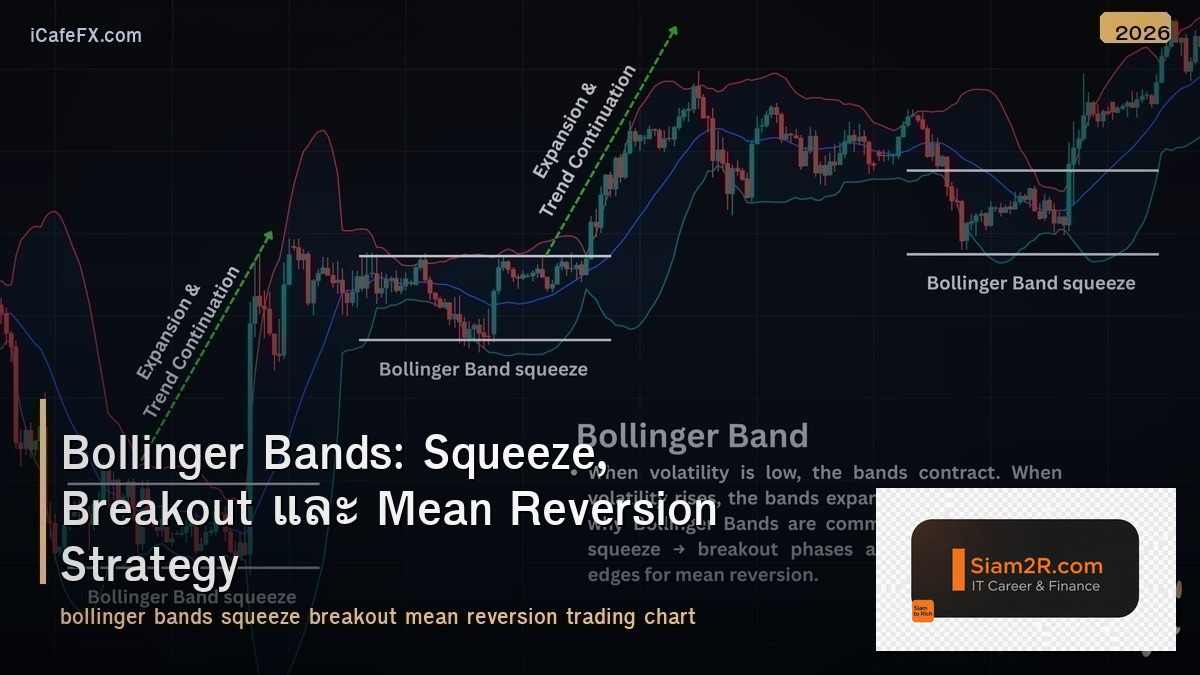
Bollinger Bands เป็น volatility indicator ที่ประกอบด้วย 3 เส้น: Middle Band (SMA 20), Upper Band (SMA + 2 SD) และ Lower Band (SMA – 2 SD) Bands จะขยายเมื่อ volatility สูง และหดตัวเมื่อ volatility ต่ำ ทำให้เห็นสภาวะตลาดและหา trading opportunities ได้
Bollinger Bands เป็น indicator ที่ ใช้ผิดมากที่สุด เพราะหลายคนคิดว่าราคาแตะ Upper Band = overbought ต้องขาย และแตะ Lower Band = oversold ต้องซื้อ ซึ่งไม่ถูกต้อง ใน trending market ราคาสามารถ “ride the band” ได้นาน บทความนี้จะสอนวิธีใช้ที่ถูกต้อง
Bollinger Bands Components
| Component | สูตร | ใช้ทำอะไร |
|---|---|---|
| Middle Band | SMA(20) | Mean (ค่าเฉลี่ย) — dynamic S/R |
| Upper Band | SMA(20) + 2×SD(20) | Upper boundary (2 SD above mean) |
| Lower Band | SMA(20) – 2×SD(20) | Lower boundary (2 SD below mean) |
| Bandwidth | (Upper – Lower) / Middle | วัดความกว้างของ bands (volatility) |
| %B | (Price – Lower) / (Upper – Lower) | ตำแหน่งราคาเทียบกับ bands (0 = lower, 1 = upper) |
Bollinger Band Squeeze
| Feature | รายละเอียด |
|---|---|
| คืออะไร | Bands หดตัวแคบมาก = volatility ต่ำสุด (consolidation) |
| ความหมาย | ตลาดกำลัง “สะสมพลังงาน” → breakout กำลังจะเกิด |
| วิธีระบุ | Bandwidth ลดลงต่ำสุดใน 6 เดือน / Bands แคบที่สุด |
| Trading | รอ breakout จาก squeeze → trade ตามทิศทาง breakout |
| ข้อควรระวัง | Squeeze ไม่บอกทิศทาง — ต้องรอ breakout confirm |
Squeeze + Breakout Strategy
| Step | Action |
|---|---|
| 1. Identify Squeeze | Bands หดตัวแคบ (low bandwidth) |
| 2. Wait for Breakout | ราคา close above Upper Band (bullish) หรือ close below Lower Band (bearish) |
| 3. Volume Confirm | Breakout ต้องมี volume สูงกว่าค่าเฉลี่ย |
| 4. Entry | Buy ที่ close above Upper / Sell ที่ close below Lower |
| 5. SL | Middle Band (SMA 20) หรือ opposite band |
| 6. TP | 1.5-2x width of squeeze หรือ next S/R level |
Mean Reversion Strategy
| Step | Action |
|---|---|
| 1. Market Condition | ตลาด sideways/range (ไม่ใช่ trending) |
| 2. Touch Upper Band | ราคาแตะ/ทะลุ Upper Band + bearish candle → Sell |
| 3. Touch Lower Band | ราคาแตะ/ทะลุ Lower Band + bullish candle → Buy |
| 4. Target | Middle Band (SMA 20) = mean reversion target |
| 5. SL | Beyond the band ที่ entry |
Band Walk (Trending Market)
| Feature | รายละเอียด |
|---|---|
| Bullish Band Walk | ราคาเดินตาม Upper Band (close ใกล้/เหนือ Upper Band ต่อเนื่อง) |
| Bearish Band Walk | ราคาเดินตาม Lower Band (close ใกล้/ใต้ Lower Band ต่อเนื่อง) |
| ข้อห้าม | ห้าม mean revert ใน band walk (ไม่ short ที่ Upper ขณะ uptrend) |
| Trading | Buy pullback ไป Middle Band ใน bullish band walk |
Bollinger + RSI Strategy
| Signal | Bollinger | RSI | Action |
|---|---|---|---|
| Strong Buy | ราคาแตะ Lower Band | RSI < 30 (oversold) | Buy (double confirmation) |
| Strong Sell | ราคาแตะ Upper Band | RSI > 70 (overbought) | Sell (double confirmation) |
| Divergence | ราคาทำ new low ที่ Lower Band | RSI higher low | Bullish divergence → Buy |
| Band Walk (ignore) | ราคา ride Upper Band | RSI 50-70 (not extreme) | ไม่ขาย — trend ยังแข็งแรง |
Settings สำหรับแต่ละ Timeframe
| Timeframe | SMA Period | SD Multiplier | Use Case |
|---|---|---|---|
| 1m-5m (Scalping) | 10-12 | 1.5-2.0 | Quick mean reversion trades |
| 15m-1H (Day Trading) | 20 | 2.0 | Standard settings work well |
| 4H-Daily (Swing) | 20 | 2.0 | Squeeze breakouts + mean reversion |
| Weekly (Position) | 20 | 2.0-2.5 | Major trend identification |
Common Mistakes
| ข้อผิดพลาด | วิธีแก้ |
|---|---|
| ขายเมื่อแตะ Upper Band เสมอ | ใน uptrend ราคา “walk” ตาม Upper Band ได้นาน → ไม่ขาย |
| ซื้อเมื่อแตะ Lower Band เสมอ | ใน downtrend ราคาตกผ่าน Lower Band ต่อเนื่องได้ → ไม่ซื้อ |
| ใช้ BB อย่างเดียว | ใช้ร่วมกับ RSI, volume, S/R สำหรับ confirmation |
| Mean revert ใน trend | Mean reversion ใช้ได้เฉพาะ sideways/range market |
| ไม่ระบุ market condition ก่อน | ระบุ trending vs ranging ก่อน → เลือก strategy ให้ตรง |
ทิ้งท้าย: Bollinger Bands = Volatility + Mean Reversion
Bollinger Bands วัด volatility ด้วย standard deviation Squeeze = low volatility → breakout กำลังจะเกิด Mean Reversion ใช้ได้เฉพาะ sideways market Band Walk = ราคา ride band ใน trend → ห้าม counter-trend ใช้ร่วมกับ RSI + Volume + S/R สำหรับ confirmation
อ่านเพิ่มเติมเกี่ยวกับ Divergence Trading RSI MACD และ Fibonacci Retracement ที่ siam2r.com หรือจาก icafeforex.com และ siamlancard.com
FAQ
Bollinger Bands: Squeeze, Breakout และ Mean Reversion Strategy คืออะไร?
Bollinger Bands: Squeeze, Breakout และ Mean Reversion Strategy เป็นหัวข้อสำคัญในวงการเทคโนโลยีที่ช่วยให้การทำงานมีประสิทธิภาพมากขึ้น ไม่ว่าจะเป็นด้าน IT, Network หรือ Server Management
ทำไมต้องเรียนรู้เรื่อง Bollinger Bands: Squeeze, Breakout และ Mean Reversion Strategy?
เพราะ Bollinger Bands: Squeeze, Breakout และ Mean Reversion Strategy เป็นทักษะที่ตลาดต้องการสูง และช่วยให้คุณแก้ปัญหาในงานจริงได้อย่างมืออาชีพ การเรียนรู้ตั้งแต่วันนี้จะเป็นประโยชน์ในระยะยาว
Bollinger Bands: Squeeze, Breakout และ Mean Reversion Strategy เหมาะกับผู้เริ่มต้นไหม?
ได้แน่นอนครับ บทความนี้เขียนให้เข้าใจง่าย เหมาะทั้งผู้เริ่มต้นและผู้มีประสบการณ์ มี step-by-step guide พร้อมตัวอย่างให้ทำตามได้ทันที
Bollinger Bands: Squeeze, Breakout และ Mean Reversion Strategy ทำไมถึงสำคัญสำหรับเทรดเดอร์?
Bollinger Bands: Squeeze, Breakout และ Mean Reversion Strategy เป็นหัวข้อที่เทรดเดอร์ทุกระดับควรศึกษาอย่างจริงจัง ไม่ว่าคุณจะเทรด Forex, ทองคำ XAU/USD หรือ Crypto การเข้าใจ Bollinger Bands: Squeeze, Breakout และ Mean Reversion Strategy จะช่วยให้ตัดสินใจเทรดได้ดีขึ้น ลดความเสี่ยง และเพิ่มโอกาสทำกำไรอย่างยั่งยืน จากประสบการณ์ที่ผ่านมา เทรดเดอร์ที่เข้าใจหัวข้อนี้ดีมักจะมี consistency สูงกว่าคนที่เทรดตามสัญชาตญาณ
วิธีนำ Bollinger Bands: Squeeze, Breakout และ Mean Reversion Strategy ไปใช้จริง
การเรียนรู้ทฤษฎีอย่างเดียวไม่พอ ต้องฝึกปฏิบัติจริงด้วย แนะนำให้ทำตามขั้นตอน:
- ศึกษาทฤษฎีให้เข้าใจ — อ่านบทความนี้ให้ครบ ทำความเข้าใจหลักการพื้นฐาน
- ฝึกบน Demo Account — เปิดบัญชี demo แล้วลองใช้ Bollinger Bands: Squeeze, Breakout และ Mean Reversion Strategy กับกราฟจริง ไม่เสี่ยงเงินจริง
- จด Trading Journal — บันทึกทุก trade ที่ใช้เทคนิคนี้ วิเคราะห์ว่าได้ผลเมื่อไหร่ ไม่ได้ผลเมื่อไหร่
- ปรับแต่งให้เข้ากับสไตล์ — ทุกเทคนิคต้องปรับให้เข้ากับ timeframe และ risk tolerance ของคุณ
- เริ่ม live ด้วยเงินน้อย — เมื่อมั่นใจแล้ว เริ่มเทรดจริงด้วย lot size เล็กๆ (0.01-0.05)
เปรียบเทียบ Bollinger Bands: Squeeze, Breakout และ Mean Reversion Strategy กับเทคนิคอื่น
| เทคนิค | ความยาก | ความแม่นยำ | เหมาะกับ |
|---|---|---|---|
| Bollinger Bands: Squeeze, Breakout และ Mean Reversion Strategy | ปานกลาง | สูง (60-70%) | เทรดเดอร์ทุกระดับ |
| Price Action | สูง | สูง (65-75%) | เทรดเดอร์มีประสบการณ์ |
| Smart Money Concepts | สูงมาก | สูงมาก (70%+) | Advanced trader |
| Indicator ง่ายๆ | ต่ำ | ปานกลาง (50-55%) | มือใหม่ |
ข้อผิดพลาดที่พบบ่อยเมื่อใช้ Bollinger Bands: Squeeze, Breakout และ Mean Reversion Strategy
- ไม่รอ confirmation — เห็น signal แล้วเข้าทันทีโดยไม่รอ price action ยืนยัน ทำให้โดน false signal บ่อย
- ใช้ timeframe เล็กเกินไป — M1, M5 noise เยอะ signal ไม่น่าเชื่อถือ แนะนำ H1 ขึ้นไป
- ไม่ดู big picture — ต้องดู higher timeframe (D1/H4) ก่อน แล้วค่อยลง lower TF หา entry
- Over-trading — เห็น signal ทุก candle ไม่ได้แปลว่าต้องเทรดทุกตัว เลือกเฉพาะที่ confluent
- ไม่ใส่ SL — ไม่ว่าจะมั่นใจแค่ไหน ต้องมี Stop Loss เสมอ
FAQ — Bollinger Bands: Squeeze, Breakout และ Mean Reversion Strategy
Bollinger Bands: Squeeze, Breakout และ Mean Reversion Strategy คืออะไร?
Bollinger Bands: Squeeze, Breakout และ Mean Reversion Strategy เป็นเทคนิค/แนวคิดสำหรับการเทรดที่ช่วยให้วิเคราะห์ตลาดได้แม่นยำขึ้น สามารถนำไปใช้กับ Forex, ทองคำ XAU/USD, Crypto และ CFD ต่างๆ ได้
Bollinger Bands: Squeeze, Breakout และ Mean Reversion Strategy เหมาะกับมือใหม่ไหม?
เหมาะครับ แนะนำให้เริ่มฝึกบน Demo Account ก่อน แล้วค่อยเริ่มเทรดจริงเมื่อมั่นใจ บทความนี้อธิบายตั้งแต่พื้นฐาน
Timeframe ไหนเหมาะกับ Bollinger Bands: Squeeze, Breakout และ Mean Reversion Strategy?
H1 และ H4 ดีที่สุดสำหรับ Bollinger Bands: Squeeze, Breakout และ Mean Reversion Strategy ใน trading ทั่วไป D1 สำหรับ swing trading M15 สำหรับ scalping
อ่านเพิ่มเติม: iCafeForex.com | SiamLanCard.com