Sector Rotation: Economic Cycle, Leading Indicators, ETF Strategy และ Relative Strength
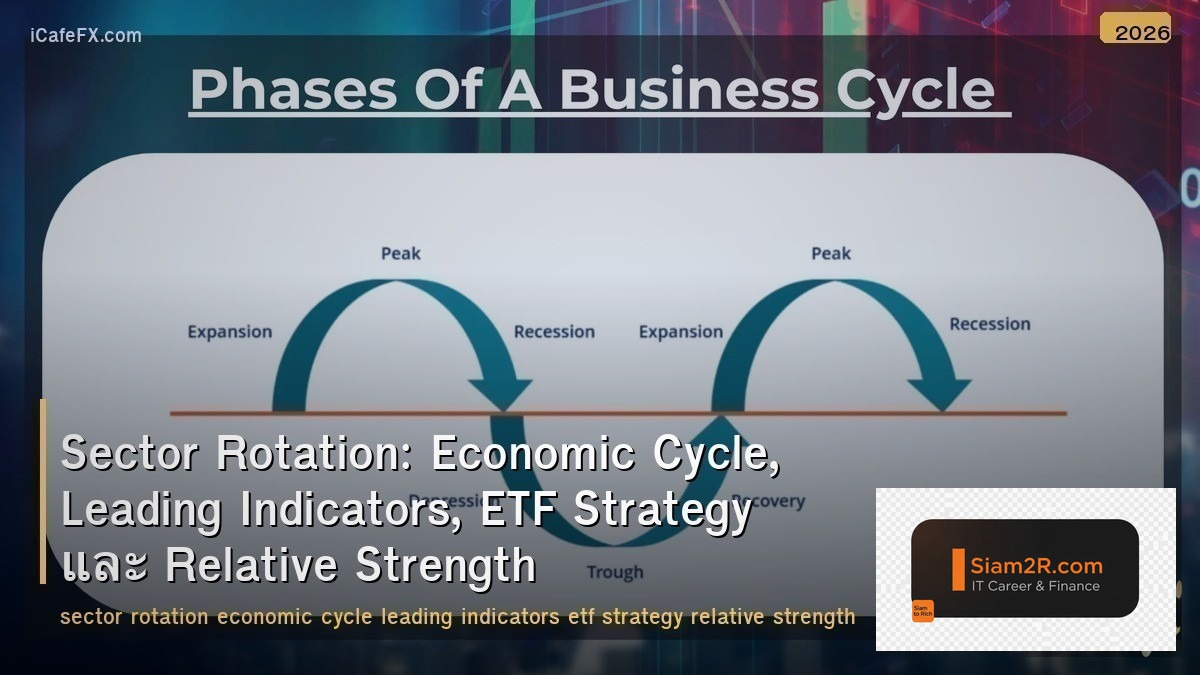
Sector Rotation เป็นกลยุทธ์การลงทุนที่ย้าย capital ระหว่าง sectors ตาม economic cycle Economic Cycle มี 4 phases ที่แต่ละ sector perform ต่างกัน, Leading Indicators ช่วยระบุว่า economy อยู่ phase ไหน, ETF Strategy ให้เข้าถึง sectors ได้ง่ายด้วยต้นทุนต่ำ และ Relative Strength วัดว่า sector ไหนแข็งแกร่งกว่าตลาดรวม
นักลงทุนส่วนใหญ่ ซื้อหุ้นเดิมตลอด ไม่ว่า economy จะอยู่ phase ไหน: ถือ tech stocks ตอน recession (ราคาลง 40%+), ถือ defensive stocks ตอน expansion (miss rally) Sector rotation ให้ framework สำหรับ allocate ไปยัง sectors ที่มีแนวโน้ม outperform ในแต่ละ phase ของ economic cycle
Economic Cycle and Sectors
| Phase | Economy | Outperforming Sectors | Underperforming Sectors |
|---|---|---|---|
| Early Recovery | GDP เริ่มโต, unemployment ยังสูง, rates ต่ำ | Financials, Real Estate, Consumer Discretionary, Industrials | Utilities, Healthcare, Consumer Staples |
| Mid Expansion | GDP โตแรง, employment ดี, earnings สูง | Technology, Communication Services, Industrials | Utilities, Energy (early), Materials |
| Late Expansion | GDP ชะลอ, inflation ขึ้น, rates ขึ้น | Energy, Materials, Industrials | Technology, Consumer Discretionary, Financials |
| Recession | GDP หด, unemployment ขึ้น, rates ลง | Utilities, Healthcare, Consumer Staples (Defensive) | Financials, Industrials, Consumer Discretionary |
11 GICS Sectors
| Sector | Characteristics | Example Stocks |
|---|---|---|
| Technology | Growth, high beta, innovation-driven | AAPL, MSFT, NVDA, ADVANC, DELTA |
| Healthcare | Defensive, stable demand, aging population | JNJ, UNH, BH, BDMS |
| Financials | Rate-sensitive, cyclical, leverage to economy | JPM, GS, KBANK, SCB, BBL |
| Consumer Discretionary | Cyclical, consumer confidence-driven | AMZN, TSLA, CPN, CPALL |
| Consumer Staples | Defensive, stable earnings, dividends | PG, KO, CPF, TU |
| Energy | Commodity-linked, inflation hedge | XOM, CVX, PTT, PTTEP |
| Materials | Commodity-linked, late-cycle | LIN, FCX, SCC, SCGP |
| Industrials | Cyclical, capex-driven, infrastructure | CAT, HON, BEM, CK |
| Utilities | Defensive, high dividend, rate-sensitive | NEE, DUK, GULF, GPSC, BGRIM |
| Real Estate | Rate-sensitive, income-producing | AMT, PLD, CPN, FTREIT |
| Communication Services | Mix of growth + defensive | META, GOOGL, TRUE, INTUCH |
Leading Indicators
| Indicator | What It Tells | How to Use |
|---|---|---|
| Yield Curve (2Y-10Y) | Inverted = recession coming (6-18 months) | Steepening → early recovery → buy cyclicals |
| PMI (Manufacturing/Services) | Above 50 = expansion, below 50 = contraction | Rising PMI → buy industrials, materials |
| Unemployment Claims | Rising = economy weakening | Claims peaking → recovery starting → buy financials |
| Consumer Confidence | High = spending will increase | Rising confidence → buy consumer discretionary |
| ISM New Orders | Leading indicator of manufacturing activity | Rising orders → buy industrials, technology |
| Housing Starts | Leading indicator of construction/economic activity | Rising starts → buy real estate, materials, home builders |
| Credit Spreads | Widening = risk aversion, tightening = risk appetite | Narrowing spreads → risk-on → buy cyclicals |
Sector ETFs
| Sector | US ETF | Expense Ratio |
|---|---|---|
| Technology | XLK (SPDR) / VGT (Vanguard) | 0.09-0.10% |
| Healthcare | XLV / VHT | 0.09-0.10% |
| Financials | XLF / VFH | 0.09-0.10% |
| Consumer Discretionary | XLY / VCR | 0.09-0.10% |
| Consumer Staples | XLP / VDC | 0.09-0.10% |
| Energy | XLE / VDE | 0.09-0.10% |
| Materials | XLB / VAW | 0.09-0.10% |
| Industrials | XLI / VIS | 0.09-0.10% |
| Utilities | XLU / VPU | 0.09-0.10% |
| Real Estate | XLRE / VNQ | 0.09-0.12% |
Relative Strength Analysis
| Method | How | Signal |
|---|---|---|
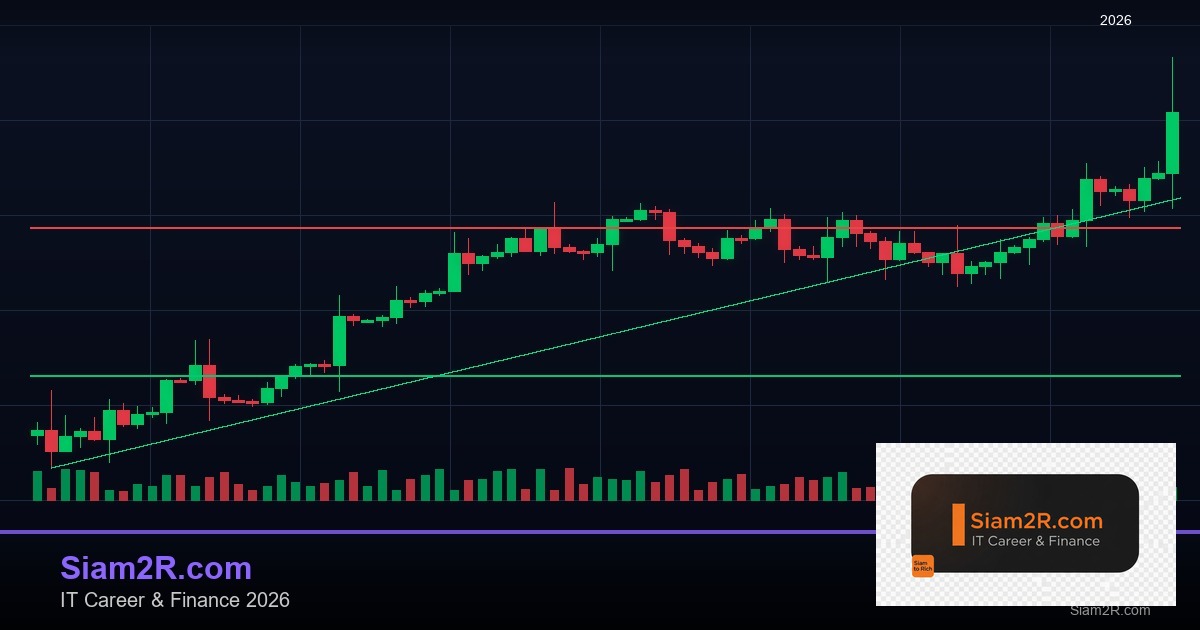
| RS Ratio | Sector Price / S&P 500 Price → ratio chart | Ratio rising = sector outperforming market |
| RS Line Breakout | RS ratio breaks above resistance | New leadership → overweight this sector |
| RRG (Relative Rotation Graph) | Plot sectors on 4 quadrants: Leading, Weakening, Lagging, Improving | Buy sectors moving from Improving → Leading |
| Sector Momentum | Compare 3/6/12-month returns of sectors | Top 3 sectors by momentum → overweight |
| Breadth | % of stocks above 200-day MA ใน sector | High breadth = healthy sector participation |
Sector Rotation Strategy
| Step | Action |
|---|---|
| 1. Identify Cycle Phase | ดู leading indicators (yield curve, PMI, claims) → determine economy phase |
| 2. Select Sectors | Overweight sectors ที่ historically outperform ใน current phase |
| 3. Confirm with RS | ใช้ relative strength ยืนยัน (sector actually outperforming?) |
| 4. Implement via ETFs | ซื้อ sector ETFs (low cost, liquid, diversified within sector) |
| 5. Rebalance | Review monthly/quarterly → rotate เมื่อ indicators เปลี่ยน phase |
ทิ้งท้าย: Sector Rotation = Right Sector, Right Time
Sector Rotation Economic Cycle: early recovery (financials, RE) → mid expansion (tech, industrials) → late (energy, materials) → recession (utilities, healthcare, staples) Leading Indicators: yield curve, PMI, claims, consumer confidence, credit spreads ETFs: XLK (tech), XLF (financials), XLE (energy), XLV (healthcare) — 0.09-0.10% fee Relative Strength: RS ratio, RRG chart, sector momentum → confirm sector leadership Strategy: identify cycle → select sectors → confirm RS → implement ETFs → rebalance Key: don’t fight the cycle — rotate capital ไปยัง sectors ที่มี tailwind จาก economic conditions
อ่านเพิ่มเติมเกี่ยวกับ Intermarket Analysis Stocks Bonds Commodities และ Quantitative Trading Algorithmic Strategies ที่ siam2r.com หรือจาก icafeforex.com และ siamlancard.com
FAQ
Sector Rotation: Economic Cycle, Leading Indicators, ETF Strategy และ Relative Strength คืออะไร?
Sector Rotation: Economic Cycle, Leading Indicators, ETF Strategy และ Relative Strength เป็นหัวข้อสำคัญในวงการเทคโนโลยีที่ช่วยให้การทำงานมีประสิทธิภาพมากขึ้น ไม่ว่าจะเป็นด้าน IT, Network หรือ Server Management
ทำไมต้องเรียนรู้เรื่อง Sector Rotation: Economic Cycle, Leading Indicators, ETF Strategy และ Relative Strength?
เพราะ Sector Rotation: Economic Cycle, Leading Indicators, ETF Strategy และ Relative Strength เป็นทักษะที่ตลาดต้องการสูง และช่วยให้คุณแก้ปัญหาในงานจริงได้อย่างมืออาชีพ การเรียนรู้ตั้งแต่วันนี้จะเป็นประโยชน์ในระยะยาว
Sector Rotation: Economic Cycle, Leading Indicators, ETF Strategy และ Relative Strength เหมาะกับผู้เริ่มต้นไหม?
ได้แน่นอนครับ บทความนี้เขียนให้เข้าใจง่าย เหมาะทั้งผู้เริ่มต้นและผู้มีประสบการณ์ มี step-by-step guide พร้อมตัวอย่างให้ทำตามได้ทันที
Sector Rotation: Economic Cycle, Leading Indicators, ETF Strategy และ Relative Strength ทำไมถึงสำคัญสำหรับเทรดเดอร์?
Sector Rotation: Economic Cycle, Leading Indicators, ETF Strategy และ Relative Strength เป็นหัวข้อที่เทรดเดอร์ทุกระดับควรศึกษาอย่างจริงจัง ไม่ว่าคุณจะเทรด Forex, ทองคำ XAU/USD หรือ Crypto การเข้าใจ Sector Rotation: Economic Cycle, Leading Indicators, ETF Strategy และ Relative Strength จะช่วยให้ตัดสินใจเทรดได้ดีขึ้น ลดความเสี่ยง และเพิ่มโอกาสทำกำไรอย่างยั่งยืน จากประสบการณ์ที่ผ่านมา เทรดเดอร์ที่เข้าใจหัวข้อนี้ดีมักจะมี consistency สูงกว่าคนที่เทรดตามสัญชาตญาณ
วิธีนำ Sector Rotation: Economic Cycle, Leading Indicators, ETF Strategy และ Relative Strength ไปใช้จริง
การเรียนรู้ทฤษฎีอย่างเดียวไม่พอ ต้องฝึกปฏิบัติจริงด้วย แนะนำให้ทำตามขั้นตอน:
- ศึกษาทฤษฎีให้เข้าใจ — อ่านบทความนี้ให้ครบ ทำความเข้าใจหลักการพื้นฐาน
- ฝึกบน Demo Account — เปิดบัญชี demo แล้วลองใช้ Sector Rotation: Economic Cycle, Leading Indicators, ETF Strategy และ Relative Strength กับกราฟจริง ไม่เสี่ยงเงินจริง
- จด Trading Journal — บันทึกทุก trade ที่ใช้เทคนิคนี้ วิเคราะห์ว่าได้ผลเมื่อไหร่ ไม่ได้ผลเมื่อไหร่
- ปรับแต่งให้เข้ากับสไตล์ — ทุกเทคนิคต้องปรับให้เข้ากับ timeframe และ risk tolerance ของคุณ
- เริ่ม live ด้วยเงินน้อย — เมื่อมั่นใจแล้ว เริ่มเทรดจริงด้วย lot size เล็กๆ (0.01-0.05)
เปรียบเทียบ Sector Rotation: Economic Cycle, Leading Indicators, ETF Strategy และ Relative Strength กับเทคนิคอื่น
| เทคนิค | ความยาก | ความแม่นยำ | เหมาะกับ |
|---|---|---|---|
| Sector Rotation: Economic Cycle, Leading Indicators, ETF Strategy และ Relative Strength | ปานกลาง | สูง (60-70%) | เทรดเดอร์ทุกระดับ |
| Price Action | สูง | สูง (65-75%) | เทรดเดอร์มีประสบการณ์ |
| Smart Money Concepts | สูงมาก | สูงมาก (70%+) | Advanced trader |
| Indicator ง่ายๆ | ต่ำ | ปานกลาง (50-55%) | มือใหม่ |
ข้อผิดพลาดที่พบบ่อยเมื่อใช้ Sector Rotation: Economic Cycle, Leading Indicators, ETF Strategy และ Relative Strength
- ไม่รอ confirmation — เห็น signal แล้วเข้าทันทีโดยไม่รอ price action ยืนยัน ทำให้โดน false signal บ่อย
- ใช้ timeframe เล็กเกินไป — M1, M5 noise เยอะ signal ไม่น่าเชื่อถือ แนะนำ H1 ขึ้นไป
- ไม่ดู big picture — ต้องดู higher timeframe (D1/H4) ก่อน แล้วค่อยลง lower TF หา entry
- Over-trading — เห็น signal ทุก candle ไม่ได้แปลว่าต้องเทรดทุกตัว เลือกเฉพาะที่ confluent
- ไม่ใส่ SL — ไม่ว่าจะมั่นใจแค่ไหน ต้องมี Stop Loss เสมอ
FAQ — Sector Rotation: Economic Cycle, Leading Indicators, ETF Strategy และ Relative Strength
Sector Rotation: Economic Cycle, Leading Indicators, ETF Strategy และ Relative Strength คืออะไร?
Sector Rotation: Economic Cycle, Leading Indicators, ETF Strategy และ Relative Strength เป็นเทคนิค/แนวคิดสำหรับการเทรดที่ช่วยให้วิเคราะห์ตลาดได้แม่นยำขึ้น สามารถนำไปใช้กับ Forex, ทองคำ XAU/USD, Crypto และ CFD ต่างๆ ได้
Sector Rotation: Economic Cycle, Leading Indicators, ETF Strategy และ Relative Strength เหมาะกับมือใหม่ไหม?
เหมาะครับ แนะนำให้เริ่มฝึกบน Demo Account ก่อน แล้วค่อยเริ่มเทรดจริงเมื่อมั่นใจ บทความนี้อธิบายตั้งแต่พื้นฐาน
Timeframe ไหนเหมาะกับ Sector Rotation: Economic Cycle, Leading Indicators, ETF Strategy และ Relative Strength?
H1 และ H4 ดีที่สุดสำหรับ Sector Rotation: Economic Cycle, Leading Indicators, ETF Strategy และ Relative Strength ใน trading ทั่วไป D1 สำหรับ swing trading M15 สำหรับ scalping
อ่านเพิ่มเติม: iCafeForex.com | SiamLanCard.com