Supply and Demand Zones: Fresh Zones, Proximal/Distal, Rally-Base-Drop, Institutional Order Flow
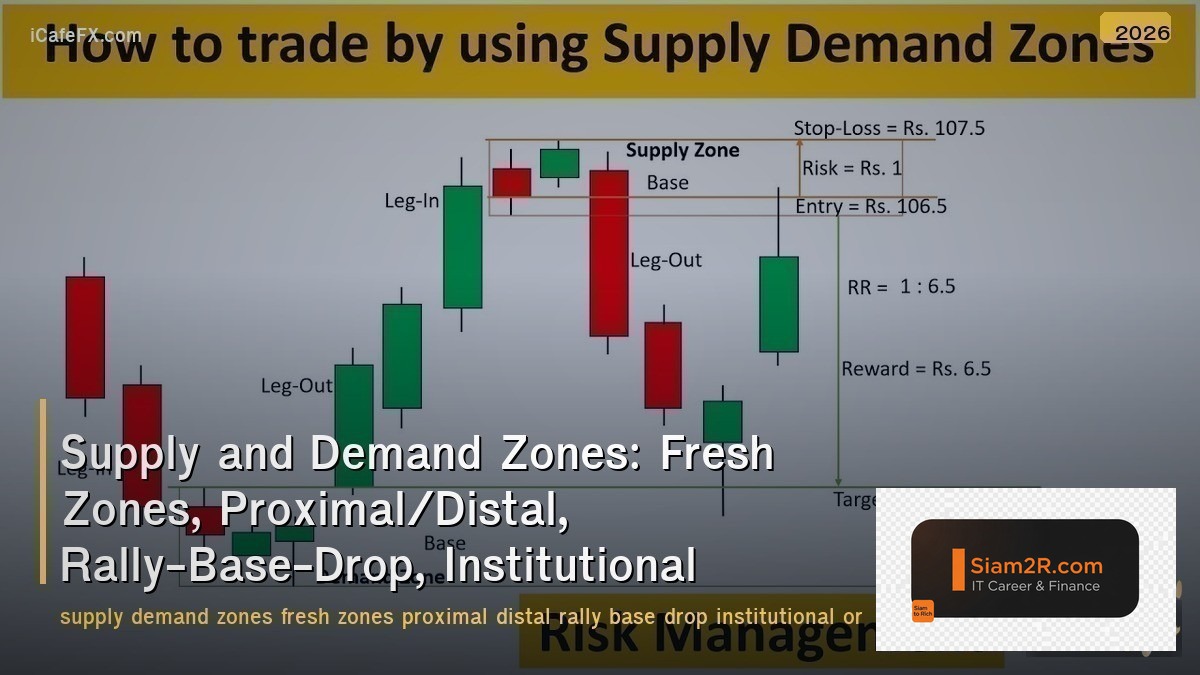
Supply and Demand Zones เป็นแนวคิดการเทรดที่ focus ที่บริเวณที่ institutional orders สะสมอยู่ Fresh Zones คือ zones ที่ยังไม่ถูก test (แข็งแรงที่สุด), Proximal/Distal Lines กำหนดขอบเขตของ zone, Rally-Base-Drop/Drop-Base-Rally อธิบายการก่อตัวของ supply/demand zones และ Institutional Order Flow วิเคราะห์ว่า smart money วาง orders ที่ไหน
Supply and Demand ต่างจาก Support/Resistance ทั่วไป ตรงที่: S/R เป็น lines (ราคาเดียว) แต่ S&D เป็น zones (ช่วงราคา) S/R ดูจาก price ที่ bounce ซ้ำ แต่ S&D ดูจาก origin ของ strong move (ที่มา orders ของ institutions) S&D zones มี “expiry” — ถ้าถูก test แล้ว orders ถูกเติมเต็ม → zone อ่อนลง → fresh zones แข็งแรงกว่า tested zones
Supply vs Demand Zone
| Feature | Demand Zone | Supply Zone |
|---|---|---|
| Location | ด้านล่าง — origin ของ strong move ขึ้น | ด้านบน — origin ของ strong move ลง |
| Orders | Unfilled buy orders ของ institutions | Unfilled sell orders ของ institutions |
| Price Action | ราคากลับมาที่ zone → buy orders activate → ราคาขึ้น | ราคากลับมาที่ zone → sell orders activate → ราคาลง |
| Formation | Drop-Base-Rally (DBR) หรือ Rally-Base-Rally (RBR) | Rally-Base-Drop (RBD) หรือ Drop-Base-Drop (DBD) |
| Trade | Buy เมื่อราคากลับมาที่ demand zone | Sell/Short เมื่อราคากลับมาที่ supply zone |
Zone Formation Patterns
| Pattern | Structure | Zone Type | Strength |
|---|---|---|---|
| Rally-Base-Drop (RBD) | ขึ้น → sideways (base) → ลงแรง | Supply Zone (ที่ base) | Strong (trend reversal origin) |
| Drop-Base-Rally (DBR) | ลง → sideways (base) → ขึ้นแรง | Demand Zone (ที่ base) | Strong (trend reversal origin) |
| Rally-Base-Rally (RBR) | ขึ้น → sideways → ขึ้นต่อ | Demand Zone (continuation) | Moderate (continuation, not reversal) |
| Drop-Base-Drop (DBD) | ลง → sideways → ลงต่อ | Supply Zone (continuation) | Moderate (continuation, not reversal) |
Proximal and Distal Lines
| Line | Description | Use |
|---|---|---|
| Proximal Line | ขอบของ zone ที่ใกล้ price ปัจจุบัน (closest edge) | Entry point — ราคาแตะ proximal = เข้า trade |
| Distal Line | ขอบของ zone ที่ไกลจาก price ปัจจุบัน (far edge) | Stop loss — ถ้าราคาทะลุ distal = zone invalidated |
| Zone Width | ระยะห่างระหว่าง proximal กับ distal | Narrow zones = stronger (tighter orders), Wide = weaker |
Zone Quality Factors
| Factor | Strong Zone | Weak Zone |
|---|---|---|
| Freshness | Fresh (ไม่เคยถูก test) — orders ยังอยู่ครบ | Tested 2-3 ครั้ง — orders ถูกเติมเต็มไปมาก |
| Departure Strength | Strong move ออกจาก zone (big candles, high volume) | Weak move (small candles, low momentum) |
| Time at Zone | สั้น (1-3 candles) — institutions ไม่ต้องรอนาน | นาน (10+ candles) — orders already partially filled |
| Zone Width | Narrow — tight institutional orders | Wide — scattered, less precise |
| Higher TF Alignment | Zone aligns with higher timeframe S&D | Against higher timeframe trend |
| Origin Type | RBD/DBR (reversal) — strongest | RBR/DBD (continuation) — moderate |
Institutional Order Flow
| Concept | Description |
|---|---|
| Why Zones Form | Institutions มี orders ใหญ่มาก → ไม่สามารถเติมเต็มทั้งหมดในครั้งเดียว → unfilled orders สร้าง zone |
| Price Returns | เมื่อ price กลับมาที่ zone → remaining orders activate → price moves away again |
| Zone Decay | ทุกครั้งที่ test → orders ถูกเติมเต็มมากขึ้น → zone อ่อนลง → หลัง 2-3 tests อาจ fail |
| Liquidity | Institutions ต้องการ liquidity → พวกเขาสร้าง zones ที่มี stop losses ของ retail อยู่ |
| Stop Hunt | Price spike ผ่าน zone briefly → trigger stops → institutions fill orders → price reverses |
Trading S&D Zones
| Step | Action |
|---|---|
| 1. Identify Higher TF Trend | Daily/4H → determine trend direction → only trade with trend |
| 2. Find Fresh Zones | Look for DBR/RBD on 1H/4H → mark proximal/distal lines |
| 3. Wait for Price to Return | Set alerts at proximal line → don’t chase → let price come to you |
| 4. Confirm Entry | Lower TF (15M) confirmation: engulfing candle, pin bar, or momentum shift at zone |
| 5. Entry | Enter at proximal line (aggressive) or after LTF confirmation (conservative) |
| 6. Stop Loss | Below/above distal line (+ small buffer) — zone invalidated if broken |
| 7. Target | Opposite zone (supply target for longs, demand target for shorts) or 2:1+ R:R |
ทิ้งท้าย: Supply & Demand = Trade Where Institutional Orders Live
Supply and Demand Zones Supply: unfilled sell orders (RBD/DBD) | Demand: unfilled buy orders (DBR/RBR) Formation: RBD/DBR (reversal, strongest), RBR/DBD (continuation, moderate) Proximal: entry edge (closest) | Distal: stop loss edge (far) — narrow zones = stronger Quality: fresh > tested, strong departure, short time at zone, narrow, HTF alignment, reversal origin Institutional: large orders → partial fill → unfilled orders create zone → price returns → orders activate → move Trading: HTF trend → find fresh zones → wait for return → LTF confirm → enter at proximal → stop at distal → target opposite zone Key: S&D zones reveal where institutions placed orders — fresh zones with strong departures have highest probability
อ่านเพิ่มเติมเกี่ยวกับ Wyckoff Method Accumulation Distribution Spring และ Order Flow Trading DOM Footprint Charts ที่ siam2r.com หรือจาก icafeforex.com และ siamlancard.com
FAQ
Supply and Demand Zones: Fresh Zones, Proximal/Distal, Rally-Base-Drop, Institutional Order Flow คืออะไร?
Supply and Demand Zones: Fresh Zones, Proximal/Distal, Rally-Base-Drop, Institutional Order Flow เป็นหัวข้อสำคัญในวงการเทคโนโลยีที่ช่วยให้การทำงานมีประสิทธิภาพมากขึ้น ไม่ว่าจะเป็นด้าน IT, Network หรือ Server Management
ทำไมต้องเรียนรู้เรื่อง Supply and Demand Zones: Fresh Zones, Proximal/Distal, Rally-Base-Drop, Institutional Order Flow?
เพราะ Supply and Demand Zones: Fresh Zones, Proximal/Distal, Rally-Base-Drop, Institutional Order Flow เป็นทักษะที่ตลาดต้องการสูง และช่วยให้คุณแก้ปัญหาในงานจริงได้อย่างมืออาชีพ การเรียนรู้ตั้งแต่วันนี้จะเป็นประโยชน์ในระยะยาว
Supply and Demand Zones: Fresh Zones, Proximal/Distal, Rally-Base-Drop, Institutional Order Flow เหมาะกับผู้เริ่มต้นไหม?
ได้แน่นอนครับ บทความนี้เขียนให้เข้าใจง่าย เหมาะทั้งผู้เริ่มต้นและผู้มีประสบการณ์ มี step-by-step guide พร้อมตัวอย่างให้ทำตามได้ทันที
Supply and Demand Zones: Fresh Zones, Proximal/Distal, Rally-Base-Drop, Institutional Order Flow ทำไมถึงสำคัญสำหรับเทรดเดอร์?
Supply and Demand Zones: Fresh Zones, Proximal/Distal, Rally-Base-Drop, Institutional Order Flow เป็นหัวข้อที่เทรดเดอร์ทุกระดับควรศึกษาอย่างจริงจัง ไม่ว่าคุณจะเทรด Forex, ทองคำ XAU/USD หรือ Crypto การเข้าใจ Supply and Demand Zones: Fresh Zones, Proximal/Distal, Rally-Base-Drop, Institutional Order Flow จะช่วยให้ตัดสินใจเทรดได้ดีขึ้น ลดความเสี่ยง และเพิ่มโอกาสทำกำไรอย่างยั่งยืน จากประสบการณ์ที่ผ่านมา เทรดเดอร์ที่เข้าใจหัวข้อนี้ดีมักจะมี consistency สูงกว่าคนที่เทรดตามสัญชาตญาณ
วิธีนำ Supply and Demand Zones: Fresh Zones, Proximal/Distal, Rally-Base-Drop, Institutional Order Flow ไปใช้จริง
การเรียนรู้ทฤษฎีอย่างเดียวไม่พอ ต้องฝึกปฏิบัติจริงด้วย แนะนำให้ทำตามขั้นตอน:
- ศึกษาทฤษฎีให้เข้าใจ — อ่านบทความนี้ให้ครบ ทำความเข้าใจหลักการพื้นฐาน
- ฝึกบน Demo Account — เปิดบัญชี demo แล้วลองใช้ Supply and Demand Zones: Fresh Zones, Proximal/Distal, Rally-Base-Drop, Institutional Order Flow กับกราฟจริง ไม่เสี่ยงเงินจริง
- จด Trading Journal — บันทึกทุก trade ที่ใช้เทคนิคนี้ วิเคราะห์ว่าได้ผลเมื่อไหร่ ไม่ได้ผลเมื่อไหร่
- ปรับแต่งให้เข้ากับสไตล์ — ทุกเทคนิคต้องปรับให้เข้ากับ timeframe และ risk tolerance ของคุณ
- เริ่ม live ด้วยเงินน้อย — เมื่อมั่นใจแล้ว เริ่มเทรดจริงด้วย lot size เล็กๆ (0.01-0.05)
เปรียบเทียบ Supply and Demand Zones: Fresh Zones, Proximal/Distal, Rally-Base-Drop, Institutional Order Flow กับเทคนิคอื่น
| เทคนิค | ความยาก | ความแม่นยำ | เหมาะกับ |
|---|---|---|---|
| Supply and Demand Zones: Fresh Zones, Proximal/Distal, Rally-Base-Drop, Institutional Order Flow | ปานกลาง | สูง (60-70%) | เทรดเดอร์ทุกระดับ |
| Price Action | สูง | สูง (65-75%) | เทรดเดอร์มีประสบการณ์ |
| Smart Money Concepts | สูงมาก | สูงมาก (70%+) | Advanced trader |
| Indicator ง่ายๆ | ต่ำ | ปานกลาง (50-55%) | มือใหม่ |
ข้อผิดพลาดที่พบบ่อยเมื่อใช้ Supply and Demand Zones: Fresh Zones, Proximal/Distal, Rally-Base-Drop, Institutional Order Flow
- ไม่รอ confirmation — เห็น signal แล้วเข้าทันทีโดยไม่รอ price action ยืนยัน ทำให้โดน false signal บ่อย
- ใช้ timeframe เล็กเกินไป — M1, M5 noise เยอะ signal ไม่น่าเชื่อถือ แนะนำ H1 ขึ้นไป
- ไม่ดู big picture — ต้องดู higher timeframe (D1/H4) ก่อน แล้วค่อยลง lower TF หา entry
- Over-trading — เห็น signal ทุก candle ไม่ได้แปลว่าต้องเทรดทุกตัว เลือกเฉพาะที่ confluent
- ไม่ใส่ SL — ไม่ว่าจะมั่นใจแค่ไหน ต้องมี Stop Loss เสมอ
FAQ — Supply and Demand Zones: Fresh Zones, Proximal/Distal, Rally-Base-Drop, Institutional Order Flow
Supply and Demand Zones: Fresh Zones, Proximal/Distal, Rally-Base-Drop, Institutional Order Flow คืออะไร?
Supply and Demand Zones: Fresh Zones, Proximal/Distal, Rally-Base-Drop, Institutional Order Flow เป็นเทคนิค/แนวคิดสำหรับการเทรดที่ช่วยให้วิเคราะห์ตลาดได้แม่นยำขึ้น สามารถนำไปใช้กับ Forex, ทองคำ XAU/USD, Crypto และ CFD ต่างๆ ได้
Supply and Demand Zones: Fresh Zones, Proximal/Distal, Rally-Base-Drop, Institutional Order Flow เหมาะกับมือใหม่ไหม?
เหมาะครับ แนะนำให้เริ่มฝึกบน Demo Account ก่อน แล้วค่อยเริ่มเทรดจริงเมื่อมั่นใจ บทความนี้อธิบายตั้งแต่พื้นฐาน
Timeframe ไหนเหมาะกับ Supply and Demand Zones: Fresh Zones, Proximal/Distal, Rally-Base-Drop, Institutional Order Flow?
H1 และ H4 ดีที่สุดสำหรับ Supply and Demand Zones: Fresh Zones, Proximal/Distal, Rally-Base-Drop, Institutional Order Flow ใน trading ทั่วไป D1 สำหรับ swing trading M15 สำหรับ scalping
อ่านเพิ่มเติม: iCafeForex.com | SiamLanCard.com